
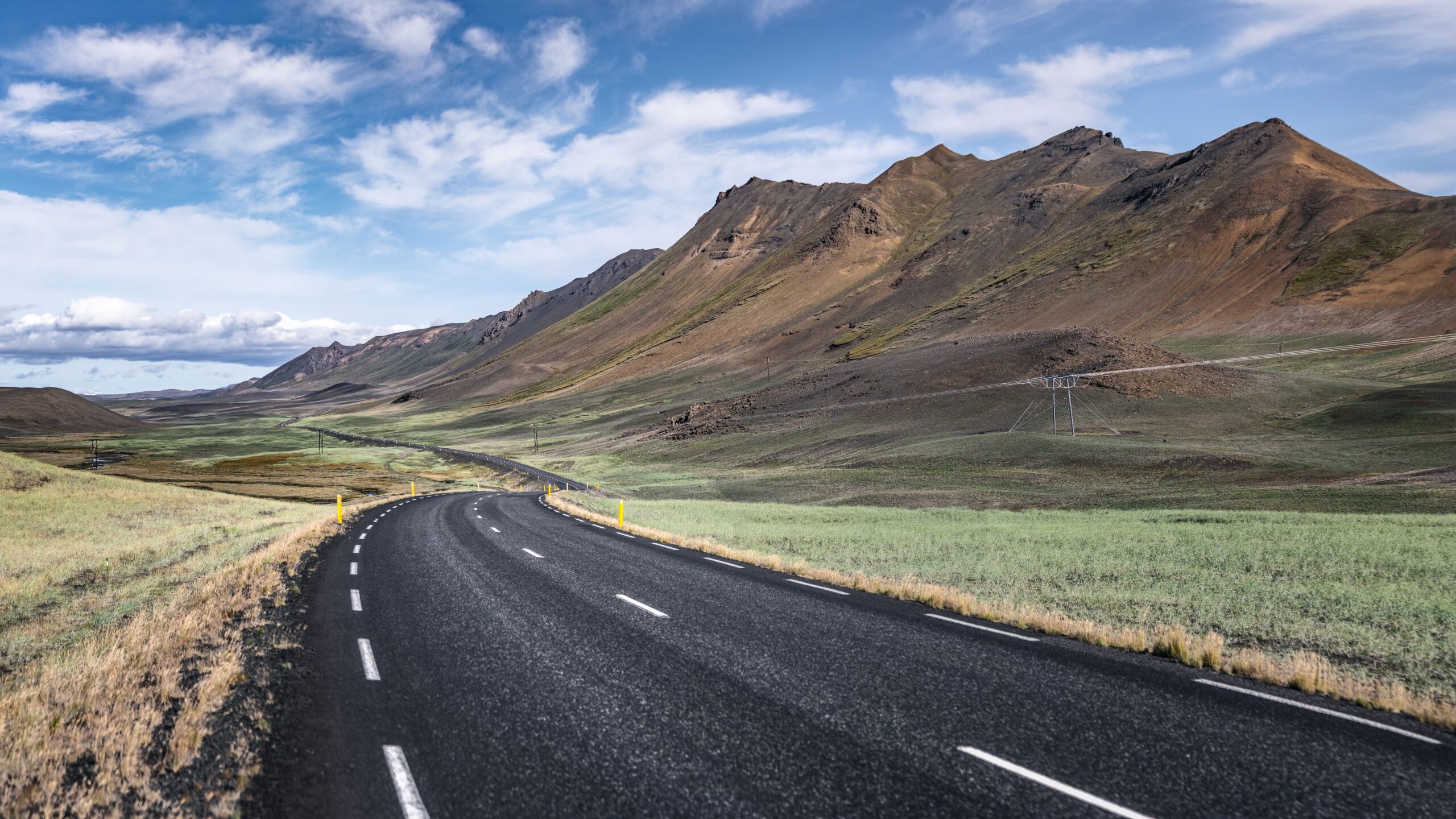
The Iceland Ring Road is 1,332 kilometers (828 miles) of highway circling the entire country.
It passes glaciers, black sand beaches, volcanic plains, geothermal lakes, dramatic fjords, and waterfalls so powerful you feel them before you see them.
It is one of the world’s great road trips. It is also one that punishes poor planning more than almost any other.
This guide gives you everything you need: multiple itinerary options, honest cost breakdowns, the 4×4 vs 2WD truth, where to sleep, what to bring, and the field-tested warnings that veteran Iceland travelers share but most articles skip.
Ring Road Fast Facts
| Official name | Route 1 / Highway 1 |
| Total length | 1,332 km (828 miles) |
| Estimated driving time (no stops) | 17 to 18 hours |
| Realistic driving time (with stops) | 25 to 30 hours total across the trip |
| Recommended minimum days | 10 days |
| Direction options | Clockwise or counterclockwise from Reykjavík |
| Road type | Mostly paved two-lane. Some gravel sections. Many one-lane bridges |
| Vehicle requirement | 2WD sufficient for Ring Road. 4×4 required for Highland F-roads only |
| Best season | Mid-May to September (summer). Winter possible but significantly harder |
| Start and end point | Reykjavík |
How Many Days Do You Actually Need?
This is the most argued question in Iceland travel communities, and the most commonly answered wrong.
The reality is that it depends on what kind of trip you want.
Here is the honest breakdown:
| Trip Length | Experience | What You Miss | Best For |
| 7 days | Rushed. South coast only done properly. East and north are rushed drives | Eastfjords properly, Mývatn with time, any Highland detour, Snæfellsnes | Travelers with hard time constraints who accept trade-offs |
| 10 days | The community standard. Full ring done at a reasonable pace. Time to stop at key sites | Westfjords, the Highlands, the Westman Islands, and any buffer for bad weather. Snæfellsnes fits, but only as one rushed day. | First-time visitors who want the full experience |
| 12 to 14 days | The ideal. Detours to Snæfellsnes, a Highlands day, time to linger at Mývatn and the glacier lagoon | Very little | Travelers who want Iceland properly, not just driven |
The veteran Reddit community is consistent on one point: attempting the full ring road in fewer than 10 days means spending most of your time driving rather than experiencing.
The Ring Road may be 828 miles but it is not a highway. It is mostly a narrow two-lane road with no shoulders, frequent single-lane bridges, sheep crossings without warning, and gravel transitions that demand slower speeds.
A traveler who budgets 5 hours of driving per day needs 6 to 7 driving days just for the loop itself. Add sightseeing and you need at least 10.
The verdict: 10 days is the minimum for a satisfying full ring road trip. 7 days is possible for the south coast only. 12 to 14 days is the ideal.
Golden Circle vs Ring Road: Which Should You Choose?
This is one of the most searched Iceland travel questions and deserves a direct answer.
| Golden Circle | Ring Road | |
| Distance | ~300 km (190 miles) loop | 1,332 km (828 miles) loop |
| Time needed | 1 day (full day) | 7 to 14 days |
| Key attractions | Þingvellir National Park, Geysir/Strokkur, Gullfoss waterfall | South coast, glaciers, black beaches, Mývatn, Eastfjords, north Iceland |
| Difficulty | Easy. Paved, well-signed, very accessible | Moderate. Long drives, remote sections, weather-dependent |
| Best for | Short stays (1 to 3 days in Iceland) | Longer trips wanting to see the whole country |
| Can you combine them? | Yes. Golden Circle fits as a day trip at the start or end of a ring road trip |
The honest answer: The Golden Circle is not a competition with the Ring Road. It is a subset.
Most Ring Road itineraries begin or end with the Golden Circle as a 1-day add-on.
If you only have 2 to 3 days in Iceland, do the Golden Circle. If you have 7 or more days, do the Ring Road and include the Golden Circle at either end.
The Golden Circle hits Þingvellir (where tectonic plates meet and Iceland’s first parliament sat), Strokkur geyser (erupts every 5 to 10 minutes), and Gullfoss waterfall.
These are genuinely world-class sights. They are also the most crowded attractions in Iceland.
The Ring Road takes you to places where you may be the only person at a waterfall.
Best Time to Drive the Ring Road
Summer (Mid-May to September)
The best and most popular season. All roads open, all services running, maximum daylight (midnight sun from late May to late July means you technically never need to stop for darkness).
Weather is warmest but still unpredictable.
Accommodation books out months in advance, especially around Mývatn and in the southeast.
Peak prices for cars and guesthouses.
Shoulder Season (April to mid-May, October)
Fewer crowds. Lower prices.
Weather increasingly unpredictable. Some mountain roads still closed.
Northern lights visible from late September onward.
A good compromise for experienced travelers.
Winter (November to March)
A completely different trip.
Shorter days (4 to 5 hours of light in December). Northern lights possible but not guaranteed.
Some Ring Road sections can close temporarily due to storms.
Ice and snow make driving significantly more demanding.
4WD becomes genuinely advisable even for the main ring road.
Prices drop considerably. Highly recommended only for experienced winter drivers who understand road condition monitoring.
Practical rule: Check road.is every morning before driving regardless of season. Iceland’s weather can change from clear to dangerous in 30 minutes.
4×4 vs 2WD: The Honest Answer
This is one of the most misunderstood topics in Iceland travel planning, and rental companies have a financial incentive to push you toward the more expensive 4×4.
For the Ring Road itself: a 2WD car is sufficient in summer.
Rick Steves has driven the entire Ring Road twice in a small 2WD car and found it completely adequate.
The main highway (Route 1) is paved. The bridges are paved. The pull-outs are gravel but manageable.
A compact car handles the Ring Road fine from May through September.
For Highland F-roads: a proper 4×4 is mandatory.
This is where the distinction matters enormously.
F-roads (mountain tracks in Iceland’s interior Highlands) are not regular roads.
They are unpaved tracks across lava fields, through rivers, over loose rock.
The "F" designation means they require high-clearance 4x4 vehicles.
The community warning is critical: standard rental SUVs like a Toyota RAV4 or Dacia Duster are not adequate for deep Highland F-roads.
They are all-wheel-drive crossovers marketed as 4×4 but they lack the ground clearance and mechanical capability for routes like F206 (Lakagígar) or F249 (Þórsmörk).
The River Crossing Rule
Many Highland routes include unbridged glacial river crossings. These are the single biggest financial risk in Iceland travel.
Standard rental insurance does not cover water damage from river crossings.
If you drive into a glacial river and flood your engine, the repair bill can reach tens of thousands of dollars and falls entirely on you.
The community rule: do not cross an unbridged river unless you have watched a vehicle of equal or larger size cross safely immediately before you.
If in doubt, turn back.
Summary:
| Situation | Recommended vehicle |
| Ring Road only, summer | 2WD compact or sedan. Saves money |
| Ring Road with occasional gravel detours | 2WD or small AWD |
| Ring Road plus Snæfellsnes, coastal detours | 2WD is fine |
| Highland F-roads (F206, F249, F208, etc.) | Proper high-clearance 4×4 mandatory |
| Winter Ring Road | 4×4 strongly advisable |
| Unbridged river crossings | Specialized 4×4 with experience only |
Iceland 4×4 Car Rental Guide
If you do need a 4×4 for Highland routes, here is what to know.
Reputable Iceland rental companies: Hertz Iceland, Avis Iceland, Europcar Iceland, Sad Cars (budget), Lagoon Car Rental, Cars Iceland, Geysir Car Rental.
Book directly through company websites or via Rentalcars.com for comparison.
Recommended vehicles for serious Highland driving:
- Toyota Land Cruiser (the gold standard for F-roads)
- Toyota Hilux
- Land Rover Defender
- Ford F-150 (limited availability)
What to verify before booking:
- Does the rental include Super CDW (collision damage waiver)?
- Does it include gravel protection insurance?
- Does it cover sand and ash damage (volcanic ash can destroy paint and engines)?
- What is the river crossing policy? (Most will void all coverage for water damage.)
- What is the 24-hour emergency number?
Typical summer 2025 rental costs (7 to 10 days):
- Economy 2WD: $600 to $1,000
- Standard 4×4 SUV (AWD crossover): $900 to $1,500
- True 4×4 (Land Cruiser category): $1,500 to $3,000+
Book early. Summer 2026 rental availability in the $1,000 to $1,500 range typically sells out by March to April.
Map of the Ring Road: Clockwise vs Counterclockwise
The Ring Road can be driven in either direction. Both are valid. Here is the honest argument for each.

Clockwise (Our Recommendation)
Start from Reykjavík heading north and west through Borgarnes and toward Akureyri. Circle through the north and east before hitting the south coast on the way back.
Advantage: You save the south coast, which has the highest concentration of spectacular scenery, for the second half of your trip.
The crescendo effect (modest early, stunning late) is more satisfying. You also arrive at the glacier lagoon and Diamond Beach from the east, which is the more dramatic approach.
Disadvantage: The first few days through west Iceland are less dramatic. Some travelers feel underwhelmed early.
Counterclockwise
Start from Reykjavík heading south and east. Hit the south coast and glaciers on Days 2 to 4.
Advantage: Front-loads the most dramatic scenery. Great if your group needs early motivation to keep going.
Disadvantage: Everything after the glacier lagoon can feel like an anticlimax by comparison. The east and north are genuinely beautiful but quieter.
Verdict: Clockwise gives you a better overall narrative arc. Counterclockwise gives you the wow moments earlier. Choose based on your group’s psychology.
10-Day Iceland Ring Road Itinerary
This is the community standard. Clockwise from Reykjavík. Enough time to stop at major sites without feeling rushed.
Day 1: Reykjavík Arrival + Blue Lagoon
Fly in, pick up your rental car, drive 45 minutes to the Blue Lagoon (book in advance, not walk-in). Check into Reykjavík accommodation.

Walk the city center: Hallgrímskirkja church, Harpa concert hall, the harbor.
Overnight: Reykjavík
Driving: Minimal
Day 2: Golden Circle

Þingvellir National Park (walk the Almannagjá Gorge, see the tectonic rift), Geysir geothermal area (watch Strokkur erupt repeatedly), Gullfoss waterfall.
Return to Reykjavík or push on to the south coast.
Overnight: Reykjavík or Selfoss area
Driving: ~250km round trip from Reykjavík
Day 3: South Coast Part 1 – Waterfalls and Black Beach

Seljalandsfoss (walk behind the waterfall; bring waterproof clothing), Skógafoss (climb the 527 stairs to the top for views), Reynisfjara Black Sand Beach (do not turn your back on the waves; sneaker waves are deadly). Vík village.
Overnight: Vík or Kirkjubæjarklaustur
Driving: ~200km from Reykjavík
Day 4: South Coast Part 2 – Glacier Country

Skaftafell National Park (hike to Svartifoss waterfall or take a glacier walk on Vatnajökull), Jökulsárlón Glacier Lagoon (walk among the icebergs, watch seals), Diamond Beach (black sand with ice chunks like scattered jewels).
These are the most photographed sites in Iceland.
Overnight: Höfn Driving: ~250km from Vík
Day 5: East Fjords
The most underrated section of the Ring Road.

Winding roads through dramatic fjords, small fishing villages, almost no tourists. Seyðisfjörður is the standout: a charming town at the end of a long fjord with a rainbow-painted road leading to the wooden church.
Take the detour in.
Overnight: Egilsstaðir or Seyðisfjörður
Driving: ~180km from Höfn
Day 6: North Iceland – Lake Mývatn

Mývatn Nature Baths (the quieter, cheaper alternative to the Blue Lagoon), Dimmuborgir lava formations, Hverfjall volcanic crater, Grjótagjá cave (small geothermal cave with brilliant blue water, made famous by Game of Thrones).
This is one of Iceland’s most geologically unique areas.
Overnight: Mývatn area Driving: ~160km from Egilsstaðir
Day 7: Diamond Circle – Akureyri

Goðafoss waterfall (waterfall of the gods, perfect horseshoe shape), Húsavík (whale watching capital of Iceland; tours run April to October), Ásbyrgi canyon (horseshoe-shaped canyon said to be the hoofprint of Óðinn’s horse).
Akureyri is Iceland’s second city: worth a few hours for cafés and the botanical garden.
Overnight: Akureyri
Driving: ~150km
Day 8: West Iceland / Snæfellsnes Peninsula (Detour)

The Snæfellsnes Peninsula is often called Iceland in miniature. It deserves a full day.
Drive through the lava fields of Berserkjahraun, walk to Kirkjufell mountain (the most photographed mountain in Iceland), see Snæfellsjökull glacier at the tip of the peninsula (Jules Verne set the entrance to the center of the earth here).
Overnight: Snæfellsnes area (Hellnar, Hellissandur, or Stykkishólmur)
Driving: ~350 to 420 km from Akureyri
Day 9: Snæfellsnes to Reykjavík

Morning at the glacier or western peninsula, then drive back toward Reykjavík along the Snæfellsnes south coast.
Stop at Ytri-Tunga beach (seal colony) if timing works.
Overnight: Reykjavík or Reykjanes Peninsula
Driving: ~200km
Day 10: Reykjavík Departure

Last morning in Reykjavík.
Flybus to Keflavík airport departs approximately 2.5 hours before flight.
7-Day Iceland Ring Road Itinerary
7 days is not enough for the full ring road done properly.
What you can do in 7 days is the south coast in depth plus a rushed version of the north and east.
Be honest with yourself about what you are choosing to skip.
| Day | Route | Key stops | Overnight |
| 1 | Arrive Reykjavík | Blue Lagoon, city walk | Reykjavík |
| 2 | Golden Circle | Þingvellir, Strokkur, Gullfoss | Selfoss |
| 3 | South Coast | Seljalandsfoss, Skógafoss, Reynisfjara | Vík |
| 4 | Glacier Country | Skaftafell, Jökulsárlón, Diamond Beach | Höfn |
| 5 | East + North (long day) | Eastfjords driving, arrive Mývatn late | Mývatn |
| 6 | North Iceland | Mývatn baths, Goðafoss, Akureyri | Akureyri or further west |
| 7 | Return to Reykjavík | Drive back via Ring Road | Reykjavík |
What you miss at 7 days: Seyðisfjörður properly, Húsavík whale watching, Snæfellsnes entirely, any time to linger anywhere in the north or east.
Where to Stay on the Iceland Ring Road
Accommodation around the Ring Road ranges from guesthouses and farm stays to campervans and wilderness camping.
Book everything in advance for summer.
Some areas have very limited options.
| Region | Accommodation style | Notes |
| Reykjavík | Hotels, hostels, Airbnb | Widest range. Book early for summer |
| South Coast (Vík area) | Guesthouses, small hotels | Limited inventory. Vík books out fast |
| Southeast (Höfn) | Guesthouses, camping | Very limited. Höfn has maybe 5 to 8 properties total |
| Eastfjords | Small guesthouses, farm stays | Quiet, charming, often great value |
| North (Mývatn) | Guesthouses, Mývatn Nature Baths area hotels | Limited supply, high demand. Books out months ahead in summer |
| Akureyri | Hotels, hostels | Most options in the north. Feels like a proper city |
| Snæfellsnes | Farm stays, small guesthouses, camping | Limited options; book early |
| Campervans | All Iceland (designated sites) | Freedom but requires research on regulations |
Accommodation Types Explained
Guesthouses (Gistiheimili): The most common Ring Road accommodation. Family-run, often with shared bathrooms. Quality varies. Usually include breakfast. Budget to mid-range.
Farm stays: Unique to Iceland. Sleep on working farms, often with horse riding or lamb-petting opportunities. Some of the most memorable Ring Road nights. Book well ahead.
Hotels: Available in Reykjavík, Akureyri, and larger towns. Scarce and expensive in remote areas.
Campervans: A popular and cost-effective option. Combines transport and accommodation.
You park at designated campgrounds (camping outside designated areas requires permission). Costs roughly comparable to a rental car plus budget guesthouse.
Camping: Camping is only permitted at designated campsites for any vehicle, including campervans. Organized campgrounds are better equipped with showers and facilities.
Recommended for the south coast and highland areas.
Iceland Ring Road Trip for Women Traveling Solo
Iceland consistently ranks as the world’s most peaceful country.
Ask any woman in Iceland travel communities whether Iceland is safe for solo female travelers and the answer is immediate and unanimous: yes, without qualification.
But the community adds something most solo female travel guides miss entirely. The conversation about safety in Iceland is not about the usual concerns.
It is not about neighborhoods to avoid, accommodation vetting, or unwanted attention from strangers. None of those are meaningful factors here.
The real safety conversation in Iceland is about the landscape.
If you break down on a remote Eastfjords stretch in deteriorating weather, your threat is not a person.
It is the fact that you may be completely alone with no mobile signal, no passing traffic, and sub-zero temperatures, possibly for hours.
That is a different category of risk and it requires a different kind of preparation.
Iceland Is Not a Coddled Tourist Destination
This is the most important thing to understand before you go, and the community repeats it consistently.
Iceland does not protect its tourists from its landscape. Most viewpoints and sites have a gravel path, a rope barrier, and an expectation of common sense.
There are no concrete walkways, no chest-high guardrails, and minimal warning signs at many of the country’s most dramatic places.
For a solo traveler, this means you have no one to pull you back from a ledge or warn you about a wave.
Reynisfjara Black Sand Beach is the most cited example. This is one of Iceland’s most visited and most photographed beaches.
It is also genuinely dangerous. Sneaker waves, which are sudden large waves that appear without warning, have killed tourists here. They come from calm-looking water with no pattern or signal.
The community’s advice for solo travelers is absolute: never turn your back on the ocean at Reynisfjara. Do not walk near the waterline to photograph the basalt columns. Stay higher up the beach.
Without a companion to keep watch, you cannot split your attention between a camera and the sea.
The Campervan vs Guesthouse Decision
This is one of the most discussed solo female Ring Road decisions. Both have genuine advantages and real drawbacks.
Campervans offer complete flexibility. You follow good weather, skip ahead if a region disappoints, and avoid the rigid booking schedule that locks you into places regardless of conditions.
Many solo women champion campervans for exactly this freedom. However, the community also notes the downsides: managing the physical mechanics of a van entirely alone (cooking in a tight space, managing battery levels, setting up in 60mph wind) can feel exhausting and isolating after several days.
In winter, it is genuinely cold and challenging alone.
Guesthouses provide something campervans cannot: human contact on demand.
The communal kitchens and shared common areas of Icelandic guesthouses are natural meeting points for solo travelers to swap road condition updates, plan the next day together, and simply not feel completely alone in a very empty country.
Hosts at smaller guesthouses are often excellent sources of real-time local knowledge. This social buffer matters more than most solo travelers expect it to before they arrive.
The practical recommendation from the community: first-time solo Ring Road travelers tend to do better in guesthouses.
Experienced solo travelers who have driven remote roads before often prefer campervans for the flexibility.
If you are unsure, book guesthouses and leave campervan for a return trip when you know the rhythms.
Driving Solo: The No Co-Pilot Reality
Driving the Ring Road alone is completely doable and done by thousands of women every year. But it creates specific logistics worth planning for.
No one checks maps while you drive. Download Iceland maps offline before leaving Reykjavík (Google Maps offline or Maps.me).
Decide your route the night before. Do not try to navigate and drive simultaneously on a narrow road with no shoulder.
You cannot pull over just anywhere. The Ring Road has almost no shoulder in many sections. If you need to check your phone, look at a waterfall, or wait for a sheep to move, you must find a designated pull-out. Do not stop on the road.
Weather decisions fall entirely on you. With a co-pilot, you can discuss whether to push through or stop. Alone, you need to have made that decision before you leave each morning by checking vedur.is and road.is.
The community rule for solo travelers is stricter than for groups: if there is an orange or red wind warning, you stay where you are.
You do not try to outrun a storm to make a booking. Rebook. The landscape will still be there.
Keep your fuel above half a tank always. Between gas stations in the Eastfjords and parts of the north, you can drive 80 to 100 kilometers with no services.
Running out of fuel alone in a remote area is a significantly more serious situation than running out with a companion.
Practical Safety Tips Specific to Women Solo Travelers
Share your itinerary. Before leaving each morning, send your planned route and overnight stop to someone at home.
A simple WhatsApp message: “Driving from Höfn to Egilsstaðir today, staying at [name]. Should arrive by 5pm local.”
If you go quiet unexpectedly, someone knows where to start looking.
Download the 112 Iceland app. This is the official Icelandic emergency app. It registers your GPS location with the Icelandic Search and Rescue (SAR) association and allows you to send a distress signal even with limited mobile data.
Required for any solo Ring Road traveler.
Do not hike alone on unmarked trails. Sticking to clearly marked, well-traveled paths is the community’s consistent advice for solo visitors.
Icelandic terrain can be unstable: volcanic rock is sharp and shifts, riverbeds change, steam vents are sometimes unmarked.
Guided glacier walks are the right choice for solo travelers rather than self-guided glacier access.
Icelandic SAR (Search and Rescue) is excellent and non-judgmental. The community notes this specifically because some travelers are reluctant to call for help thinking they will be charged or judged for getting into trouble.
Iceland’s SAR volunteers are highly experienced, completely free to use, and respond without criticism. If you are in genuine difficulty, call 112 without hesitation.
The Honest Answer on Loneliness
The community is honest about this in a way most solo travel guides are not.
Iceland is vast, remote, and often eerily quiet outside of Reykjavík and the major tourist sites. Some solo travelers find this profoundly moving.
Others find it unexpectedly overwhelming after three or four days of driving through landscapes where the nearest town is an hour away.
There is no shame in either response.
If you find the isolation building, guesthouses with communal spaces, connecting with other Ring Road travelers at the same sites (you will see the same faces repeatedly), and building in a rest day in Akureyri or another town can reset the emotional balance.
Iceland rewards solo travelers who come prepared for both the landscape and the silence.
Iceland Ring Road Trip Cost: 2025 Breakdown
Iceland is one of Europe’s most expensive countries.
Here is a realistic cost breakdown per person for 2025.
| Category | Budget option | Mid-range | Higher end |
| Flights (return, US/Europe) | $400 to $600 | $700 to $1,000 | $1,000+ |
| Car rental (10 days, 2WD) | $600 to $900 | $900 to $1,400 | $1,400+ |
| Gas (full ring road + detours) | ~$350 to $450 | ~$400 to $500 | Same (gas price fixed) |
| Accommodation (per night) | $80 to $120 (hostel/guesthouse shared) | $120 to $200 | $200 to $400+ |
| Food (per day) | $40 to $60 (grocery stores, gas station hot dogs) | $70 to $100 (mix of groceries and restaurants) | $100 to $150+ |
| Activities | $100 to $200 (selective paid tours) | $300 to $500 | $500 to $1,000+ |
| Total per person (10 days) | ~$2,000 to $2,800 | ~$3,000 to $4,500 | $5,000+ |
Key Cost-Saving Notes
The Bonus Card / N1 app: Iceland’s N1 gas station chain has a loyalty card that provides a small discount per liter.
Download the N1 app before your trip. Over 400 liters of fuel across the ring road, the savings add up.
Buy groceries in Reykjavík. Grocery stores outside Reykjavík (Bónus, Krónan, Nettó) are scarcer and more expensive.
Stock up on snacks, lunch ingredients, and breakfast items before leaving the city.
Gas station hot dogs are not a joke. The Icelandic pylsa (hot dog) at N1 stations costs around 500 to 700 ISK (approximately $4 to $5). They are genuinely good.
A proper restaurant lunch costs 3,000 to 5,000 ISK ($22 to $37).
Blue Lagoon is expensive but optional. Entry runs 7,990 to 14,990 ISK ($58 to $110) depending on package.
Mývatn Nature Baths in the north are significantly cheaper and less crowded. Both are good.
Gas Station Strategy
This is the most practical section in this guide and the one most often left out of Ring Road articles.
Rule 1: Fill up at every gas station when below half tank. On some Ring Road sections, particularly in the Eastfjords and Highlands, gas stations are 80 to 100 kilometers apart. Running low between stations is a real risk.
Rule 2: Set up a PIN on your credit card before you travel. This is critical and frequently catches US travelers off guard.
Many Ring Road gas stations are unmanned, particularly outside business hours. These automated pumps require a chip-and-PIN card (a 4-digit PIN associated with your credit/debit card) to authorize fuel delivery.
A signature-based US credit card with no PIN setup will not work at these unmanned pumps.
Before your trip: Call your US credit card company and request a PIN for your card. This typically takes 7 to 10 business days to arrive by mail.
Alternatively, bring a debit card with a PIN as backup.
Rule 3: Iceland is essentially cashless, with one major exception. The community consensus is clear: you need virtually no physical Icelandic Króna.
Restaurants, guesthouses, supermarkets, tourist sites, and even many small farm stays accept cards and contactless payment.
However, some remote toilet facilities and a few parking areas still accept only coins. Keep a small amount of ISK for these situations.
Major gas station chains on the Ring Road: N1 (most common), Orkan, Olís, Olis. All have toilet facilities, hot food, and basic supplies.
Weather and Road Safety: The Two Morning Checks
Iceland’s weather is the ultimate dictator of your Ring Road experience. The community is unanimous: treat the weather with absolute respect.
Iceland’s maritime climate can shift from sunshine to 60mph horizontal wind gusts within 30 minutes. Weather in the south can be completely different from weather in the north on the same day.
Every morning before you start driving, check these two sites:
vedur.is – The official Icelandic Meteorological Office. Check for wind alerts specifically.
Yellow, orange, and red warnings indicate escalating danger.
Orange and red warnings can mean bridges close to traffic. Wind speeds are shown in meters per second: 20 m/s is 72 km/h (45 mph).
30 m/s is 108 km/h (67 mph). In open terrain with no shelter, 30 m/s winds can knock a person over.
road.is – Live road conditions across Iceland.
Shows which roads are open, closed, or have icy/slippery conditions. Updated in near-real-time.
The Ring Road sections will show closures during and after severe weather.
The Car Door Warning
This sounds minor until it happens to you. It is one of the most consistent tips in the community threads.
When you exit your vehicle in Iceland’s wind, hold your car door with both hands.
Wind gusts in exposed areas can catch an open car door and bend it violently backward, snapping the hinges.
This causes hundreds or thousands of dollars in damage that most standard rental coverage does not cover.
Get out of the car with one hand on the door at all times. This is a habit worth building on Day 1.
The Sheep Problem
Icelandic sheep roam freely across the Ring Road, especially in summer.
They appear without warning, stand in the road, and do not respond to horns in predictable ways.
The speed limit on the Ring Road is 90 km/h (56 mph) on paved sections and 60 to 80 km/h on gravel.
Drive at the lower end on any road where sheep are visible in adjacent fields.
What to Bring: Ring Road Packing List
The Vehicle Essentials
These go in the car and stay there for the whole trip.
- Toilet paper (multiple rolls). The most consistently repeated practical tip across all Iceland travel communities.
- Between small towns, bathrooms can be 50 to 80 kilometers apart. Many remote bathrooms at trailheads and parking areas run out of paper or have none at all. Carry your own and keep it in the car.
- Hand sanitizer. Some remote facilities have no running water.
- Coins (ISK). A small supply for coin-operated toilets and parking meters in some towns. 100 and 200 ISK coins are most useful.
- Snacks and water. Between gas stations, you can drive an hour or more with nothing available. Keep a stock of food in the car.
- Offline maps. Download the Iceland map on Maps.me or Google Maps offline before you leave Reykjavík.
- Mobile data can disappear for hours on remote Ring Road sections.
- Portable phone charger. Car charging only when driving is not always sufficient.
Clothing
Iceland’s weather requires layering. The single most useful system:
- Base layer: Thermal merino wool or synthetic. Worn every day.
- Mid layer: Fleece or down jacket. You will want this even in July.
- Outer layer: Waterproof shell jacket and waterproof trousers. Essential. Not optional. Wind and rain can hit at any moment.
- Waterproof boots or hiking shoes. The ground around waterfalls and beaches is often wet. Regular sneakers will be soaked within minutes at Seljalandsfoss.
Other Essentials
- Swimsuit (for Mývatn Nature Baths, Blue Lagoon, hot pots)
- Microfiber travel towel (many guesthouses charge extra for towel rental)
- Sunscreen (UV is intense even through cloud cover in summer)
- Sunglasses
- Binoculars (puffins, seals, reindeer in the east)
- Physical booking confirmations for accommodation (mobile signal drops in remote areas)
Bathroom Guide for the Ring Road
This is genuinely important information and covered in depth by no Ring Road article that also includes an itinerary.
The reality: Between small towns on the Ring Road, there can be 80 to 100 kilometers with no toilet facility.
In the Eastfjords and parts of the north, this is the norm. Planning bathroom stops is not trivial, especially with children or older travelers.
Where to find toilets:
Gas stations (most reliable). N1, Orkan, and Olís stations always have toilets. These are your primary bathroom stops. Use them every time you fuel up, even if you do not feel the need.
Major tourist sites. Waterfalls, glacier lagoons, and national park trailheads have toilets, often in seasonal portable structures. Some charge 200 to 500 ISK (coin-operated). Have coins ready.
Visitor centers. Þingvellir, Skaftafell, and the Jökulsárlón visitor center all have free toilets.
Towns and villages. Vík, Höfn, Egilsstaðir, Akureyri, and other towns have public toilets or cafe/restaurant access.
The golden rule: never pass a gas station without at least considering a bathroom stop. On the Ring Road, the next one might be two hours away.
A Final Word: Surrender the Schedule
Every veteran Iceland traveler says the same thing eventually. The best moments of their Ring Road trip were not the ones on the itinerary.
It was pulling over because a waterfall appeared around a corner that no guidebook mentioned.
It was sitting in a natural hot pot in the dark while rain fell on their face. It was the morning the fog lifted over the Eastfjords and the view from the guesthouse window was better than any photograph they had ever seen.
Iceland rewards flexibility. Build slack into every day. Do not try to see everything. Check the weather and road conditions every morning.
Hold your car door when you get out.
The Ring Road will take care of the rest.
Gangi þér vel! — Good luck, and go well ❤️❤️❤️.
FAQs
1. How long is the Ring Road in Iceland?
The Ring Road (Route 1) is 1,332 kilometers (828 miles) long. Without stops, it takes approximately 17 to 18 hours of driving to complete.
With sightseeing stops and realistic daily driving limits, the full circuit takes 10 to 14 days for a satisfying experience.
2. How many days do you need to drive the Ring Road in Iceland?
The community consensus is a minimum of 10 days. 7 days is possible but means rushing and missing significant sections, particularly the Eastfjords and north Iceland.
12 to 14 days allows for the Snæfellsnes Peninsula detour, Highlands day trips, and time to linger at the places that deserve it.
3. How long does it take to drive the circle in Iceland?
Pure driving time without stops is 17 to 18 hours. In practice, spread across a 10-day trip, you drive 2 to 5 hours per day.
On longer driving days (particularly through the East and North), plan for 5 to 6 hours in the car.
4. Do I need a 4×4 to drive the Ring Road in Iceland?
No, not for the Ring Road itself in summer. A 2WD car handles Route 1 comfortably from May through September.
You only need a proper high-clearance 4×4 for Highland F-roads (F206, F208, F249, etc.), which are separate from the Ring Road and require specialized vehicles.
5. Where do you sleep on the Iceland Ring Road?
Options range from guesthouses and farm stays to hotels, hostels, campervans, and designated camping areas.
The most important thing is to book accommodation in advance, particularly for the south coast (Vík), southeast (Höfn), and Lake Mývatn areas, which have very limited supply and sell out months ahead in summer.
6. What does an Iceland Ring Road trip cost?
A realistic 10-day ring road budget (per person) ranges from $2,000 to $2,800 at the budget end (grocery shopping, shared guesthouses) to $3,000 to $4,500 mid-range, to $5,000+ at the higher end.
The biggest costs are flights, car rental, gas (~$400 for the full ring), and accommodation.
7. Is it better to do the Golden Circle or the Ring Road?
They are not alternatives. The Golden Circle (300km loop near Reykjavík, doable in 1 day) is typically included as a day at the start or end of a Ring Road trip.
If you have 1 to 3 days in Iceland, do the Golden Circle. If you have 7 or more days, do the Ring Road and include the Golden Circle within it.
8. Do I need cash in Iceland?
Almost never. Iceland is one of the most cashless societies in the world. Cards and contactless payment are accepted virtually everywhere including remote gas stations and small guesthouses.
The critical exception: unmanned gas station pumps require a chip-and-PIN card. Set up a PIN on your credit card before traveling.
Keep a small amount of ISK coins for coin-operated toilets and occasional parking meters.
9. Should I drive the Ring Road clockwise or counterclockwise?
Clockwise is generally recommended because it saves the south coast (the most dramatic section) for the second half of the trip, creating a satisfying crescendo effect.
Counterclockwise front-loads the wow factor if your group needs early motivation.
10. What should I bring that most travelers forget?
Toilet paper (multiple rolls), coins for remote coin-operated facilities, a PIN-enabled credit card, offline maps downloaded before leaving Reykjavík, and a waterproof jacket.
The toilet paper tip sounds trivial until you are 40 kilometers from the nearest gas station.