

The products and brands in this article were identified through real-time search trend data across Google, YouTube, Meta, X, LinkedIn, TikTok, and Pinterest. Nothing here is a personal opinion or paid placement. However, this article may contain affiliate links. At no cost to you, I will earn a commission, which helps reduce the ever-increasing costs of keeping this site active.
The Korean skincare market is projected to reach $13.9 billion by 2027, growing at 8.5% annually, and the ingredients fuelling that growth are not what most people expect.
Source: ViralVaultNetwork Research
Rice water has been poured down Korean kitchen drains for centuries, quietly dismissed as cooking runoff. The beauty industry just figured out it was liquid gold.
I grew up questioning what goes into the products we use on our bodies.
Losing my mother to cancer at twelve, despite her meticulous approach to health and cleanliness, left me with a question I could never shake: if doing everything right was not enough, then something hidden in modern products had to be wrong.
That question eventually led me to Korean skincare. Not as a trend to follow, but as a philosophy that made sense.
Here is what is going viral in K-beauty right now.
Joseon Dynasty Physicians Were Right: The 500-Year Ingredient Tradition the West Just Discovered
Korean skincare is outselling legacy Western brands in 23 countries, and it costs a fraction of the price.
That is not a coincidence. The traditions behind today’s bestselling K-beauty products stretch back centuries, developed by cultures that treated skincare as a daily health practice rather than a cosmetic ritual.
Three ingredients are behind most of the results people are seeing.
Snail mucin was not discovered in a laboratory.
Chilean snail farmers noticed their hands stayed unusually smooth and cut-free despite daily handling of snails.
Scientists investigated and found a complex of hyaluronic acid, glycoproteins, and peptides that repair the skin barrier from within.
Korean brands were the first to formulate it into a consumer product. The rest is an 87,000-review Amazon bestseller.
Snail secretion sounds like something you would rinse off your shoe. It is also the ingredient with over 87,000 reviews on Amazon and a three-month waitlist.
Rice water has been used in Japan since the Heian period, around 1000 AD, when court ladies rinsed their floor-length hair with it for strength and shine.
The ritual crossed into Korean beauty over centuries and became a household staple.
Today it is the single fastest-growing facial cleanser ingredient in global skincare.
Fermented rice water is even more potent: the fermentation produces kojic acid naturally, the same brightening compound luxury brands synthesise and charge $80 for.
Fermented rice water contains up to ten times more nutrients than plain rice water.

The fermentation process produces kojic acid naturally, the same brightening compound that luxury brands synthesise and charge $80 for.
Ginseng has appeared in Korean royal court skincare rituals for over 500 years.
Hanbang, the Korean philosophy of using herbal medicine to treat the whole body, placed ginseng at the centre of anti-aging practice long before Western beauty had a word for it.
When my wife was diagnosed with severe female pattern hair loss, and no doctor could identify the root cause, we began replacing chemical-heavy skincare products one by one with cleaner alternatives.
Korean skincare, built on minimal formulations and botanical ingredients with long track records, became a central part of that shift.
What I came to believe over years of research is that what you avoid matters as much as what you add.
(Always consult your healthcare provider before making significant changes to your routine.)
Glass Skin Is Not a Filter. Here Is the Biology Behind It.
Most people assume the 10-step Korean routine is the whole point. It never was.
The routine is a menu, not a checklist. Most Koreans use four or five steps on a normal day. The goal is barrier integrity, not step count.
Glass skin, the poreless, luminous look generating over 2 billion Pinterest impressions annually, happens when your skin barrier is so intact it reflects light uniformly.
Most Western cleansers strip the exact lipids that make that reflection possible.
Korean cleansing philosophy builds them back at every step.
The number that made this category impossible to ignore: an 8.5% annual growth rate in a market already worth billions, driven entirely by results that people shared with their friends.
That is where the products below come in.
11 K-Beauty Products That Were Sold Out in Seoul Before Western Stores Knew They Existed
These 13 products are a curated mix. Some are the core K-beauty products driving the trend directly: the cleansers, toners, serums, and SPF that form the glass skin pipeline.
Others are complementary products that Korean skincare users consistently layer alongside them, or that extend the K-beauty philosophy into areas Western routines have never addressed.
You need to understand both halves to build a routine that actually works.
Products are listed in application order, from first step to last.
1. Rice Water Face Wash
Rice water face wash uses the nutrient-rich water extracted from rinsed rice to cleanse skin without stripping its moisture barrier.
The inositol in the rice water helps strengthen the barrier during the cleansing step itself, making it the gentlest possible first step in any K-beauty routine.
Search interest in rice water cleansers grew over 200% in 12 months across Pinterest and TikTok combined.
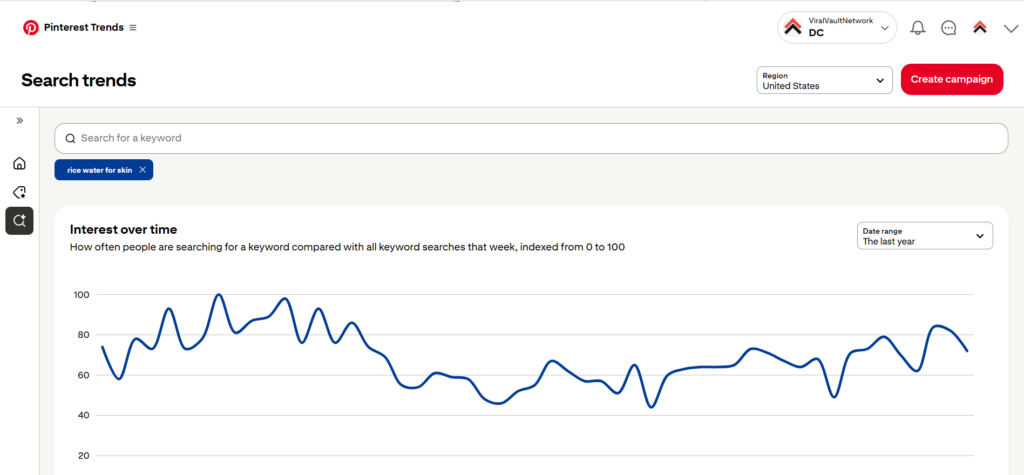
Users consistently report brighter, more even skin tone within two to three weeks of switching from standard foam cleansers.
2. AHA Brightening Toner
AHA brightening toner delivers gentle alpha hydroxy acid exfoliation in a leave-on format, dissolving dead surface cells so every product applied after absorbs properly rather than sitting on top.
This is the step most Western routines skip entirely, and it is a primary reason K-beauty converts notice a texture difference within weeks.
Patch test before adding this step. Sensitive skin does best starting with two applications per week and building from there.
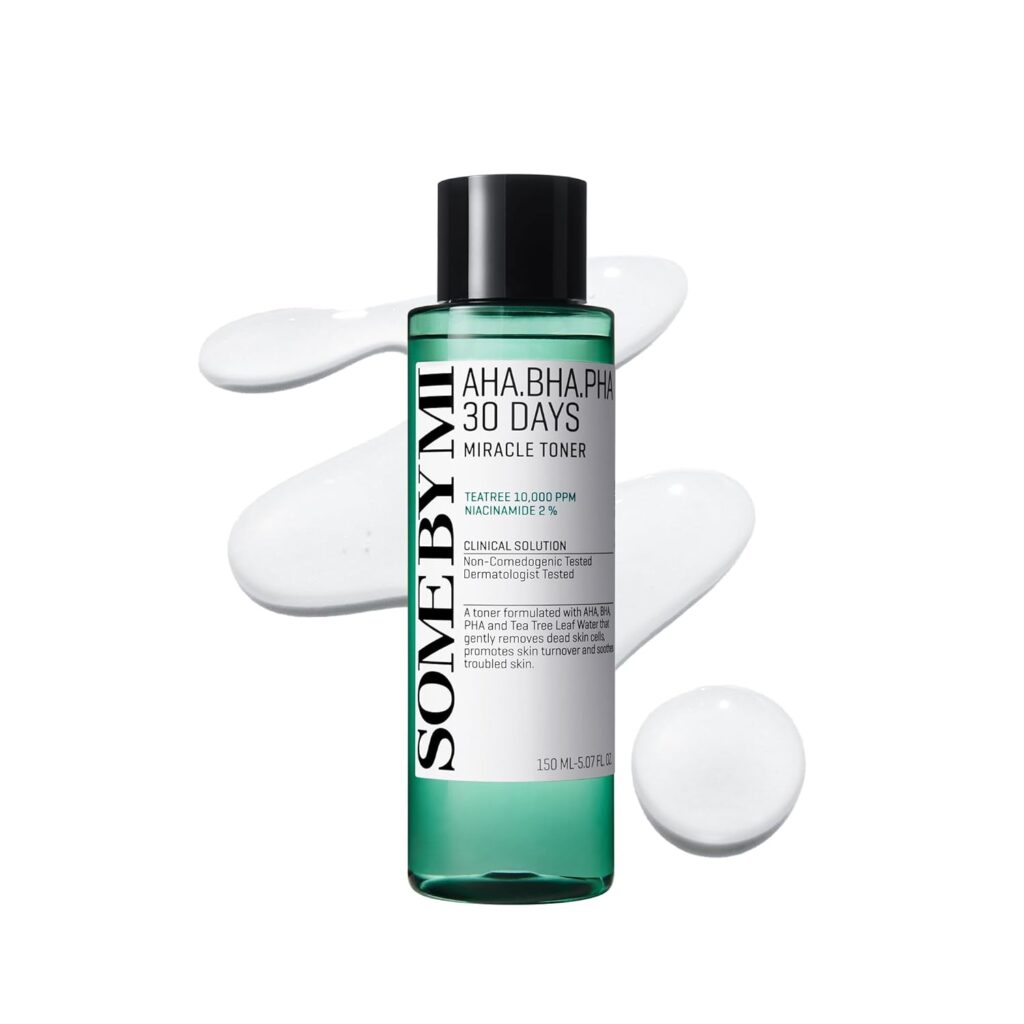
Some By Mi AHA BHA PHA 30 Days Miracle Toner is the most recommended entry-level option for this step in beginner K-beauty communities. 8k+ people bought it every month!
3. Birch Toner
Birch toner uses birch sap, a mineral-rich botanical water, to saturate the skin with lightweight moisture without sticky residue. It prepares skin to receive serums at full absorption efficiency.
Torriden’s Dive-In Low Molecular Hyaluronic Acid Toner consistently sells out across Yesstyle, Amazon, and Korean beauty platforms because birch sap delivers a mineral profile that standard hyaluronic acid toners cannot match.
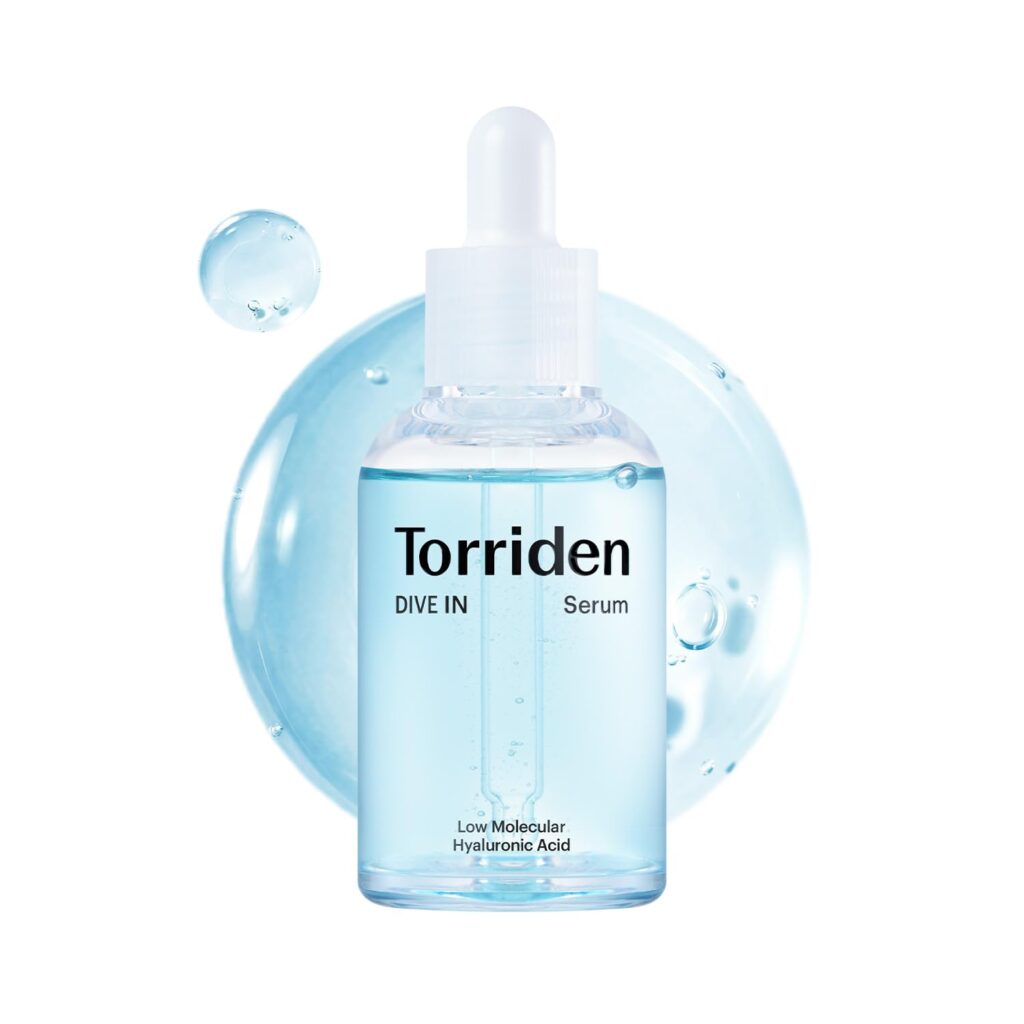
The Torriden Dive-In Low Molecular Hyaluronic Acid Toner is the category benchmark for this step. 20k+ people bought this last month! 😮
This product is free from fragrance, alcohol, parabens, phthalates, and formaldehyde.
4. Ginseng Essence Water
Ginseng essence water delivers antioxidant protection and the first layer of anti-aging actives in a lightweight essence.
Applied after toning, it primes the skin to absorb the heavier serums that follow at full efficiency.
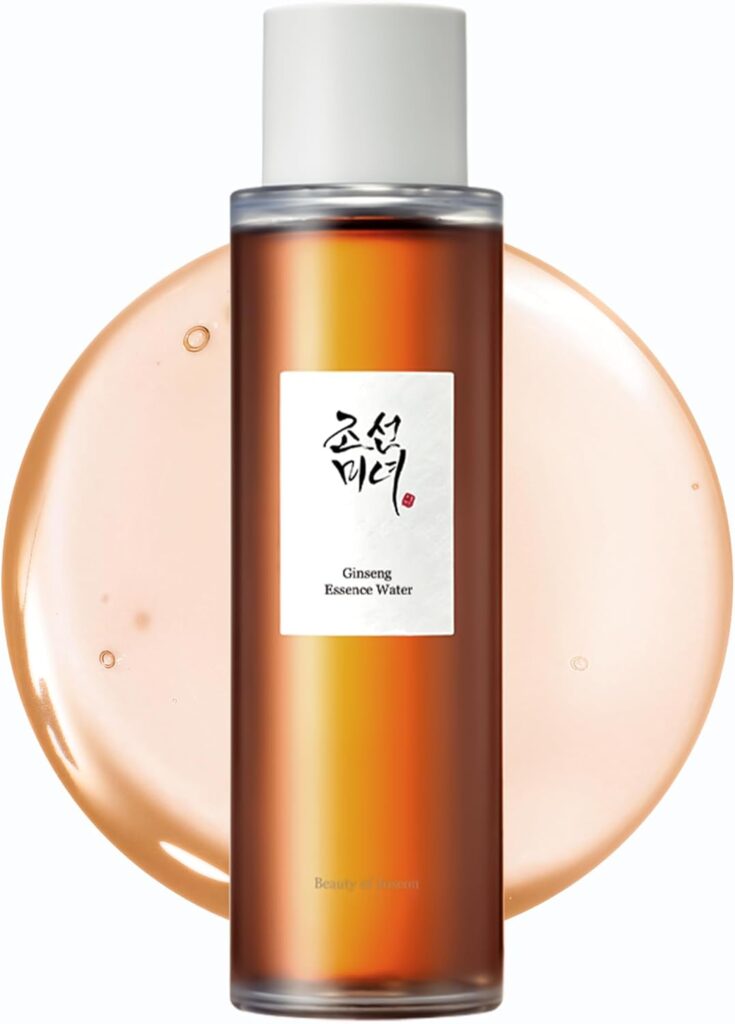
Beauty of Joseon’s Ginseng Essence Water became one of the most waitlisted K-beauty products of 2025.
The brand draws its philosophy from Joseon Dynasty hanbang medicine, which gives its formulas five centuries of cultural validation alongside modern testing.
It is the most recommended essence for anti-aging-focused K-beauty buyers. 6k+ people have bought it every month!
5. Snail Mucin Serum
Snail mucin serum delivers hyaluronic acid, glycoproteins, and peptides in a lightweight format known for repairing and hydrating the skin barrier simultaneously.
It is the product that put Korean skincare on the global map.
Here is the number worth knowing: 87,000 Amazon reviews. Not for a phone or a novel.
For a serum made from snail secretion. Hailey Bieber named snail mucin in her nighttime routine video, and search volume for the category tripled in the following week.
SK-II Facial Treatment Essence, the Western benchmark for barrier repair, costs $185 for 75ml.
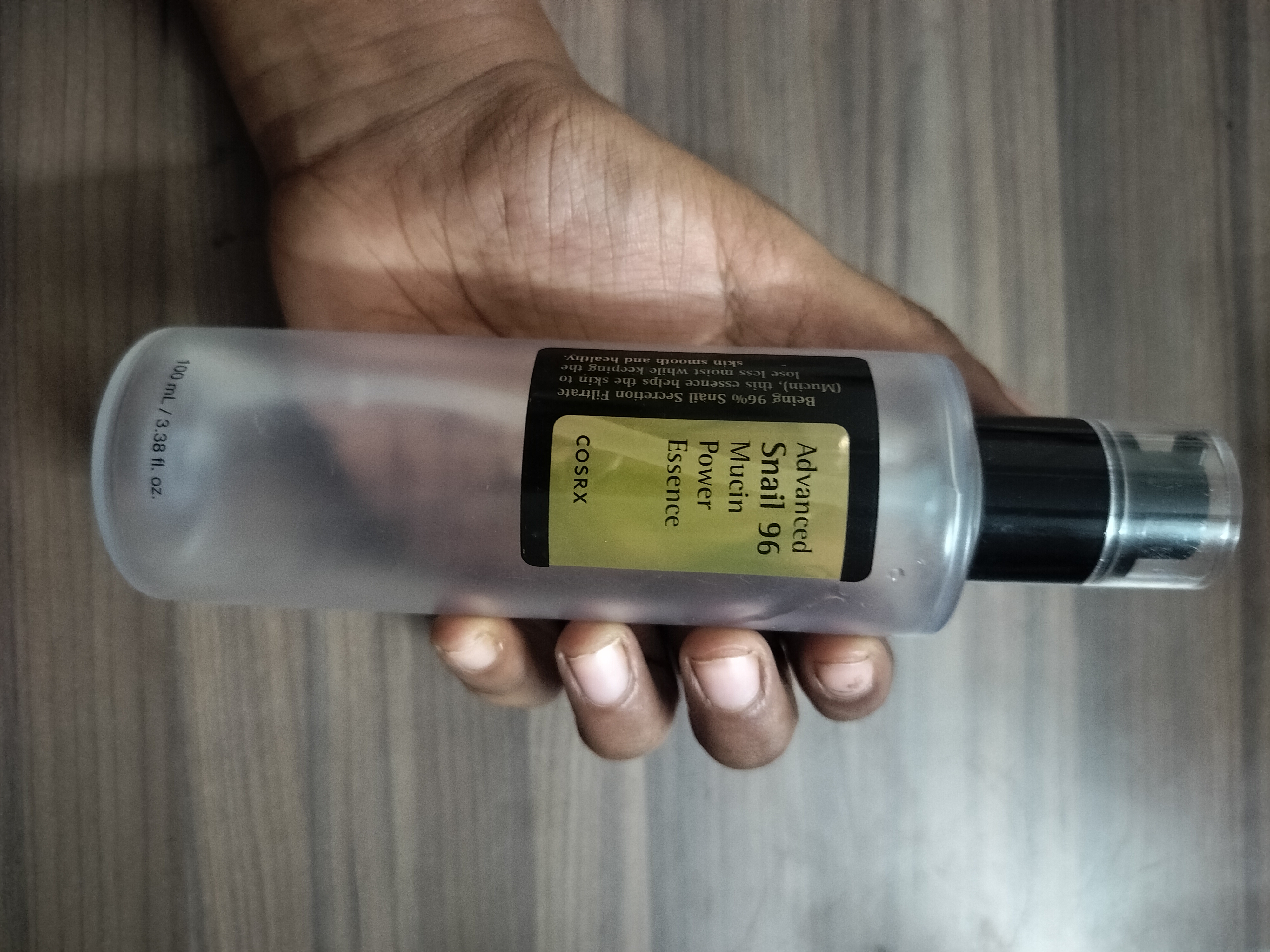
Cosrx Advanced Snail 96 Mucin Power Essence delivers comparable hydration and barrier repair for $25 per 100ml.
The ingredient lists are remarkably similar. 100k+ users bought this Snail Mucin Serum in June 2026!
Patch test before first use. Suited to all skin types, with the strongest results on dry, sensitised, or post-procedure skin.
In 2014, a Cosrx serum with snail secretion in the ingredient list sold out across South Korea in 72 hours.

The brand had barely advertised it. Word spread because the results were too visible to stay quiet.
6. Glass Skin Serum
Glass skin serum concentrates three to four hydrating actives into a single step, designed to deliver the layered luminosity of a multi-step routine in one application.
The glass skin effect is not one ingredient working alone. It is a sequence of hydrating actives in a specific order, and this serum compresses that logic into a single product.
If your skin barrier is already healthy and your hydration is consistent, you can skip this step and put that budget toward the snail mucin serum and SPF instead.
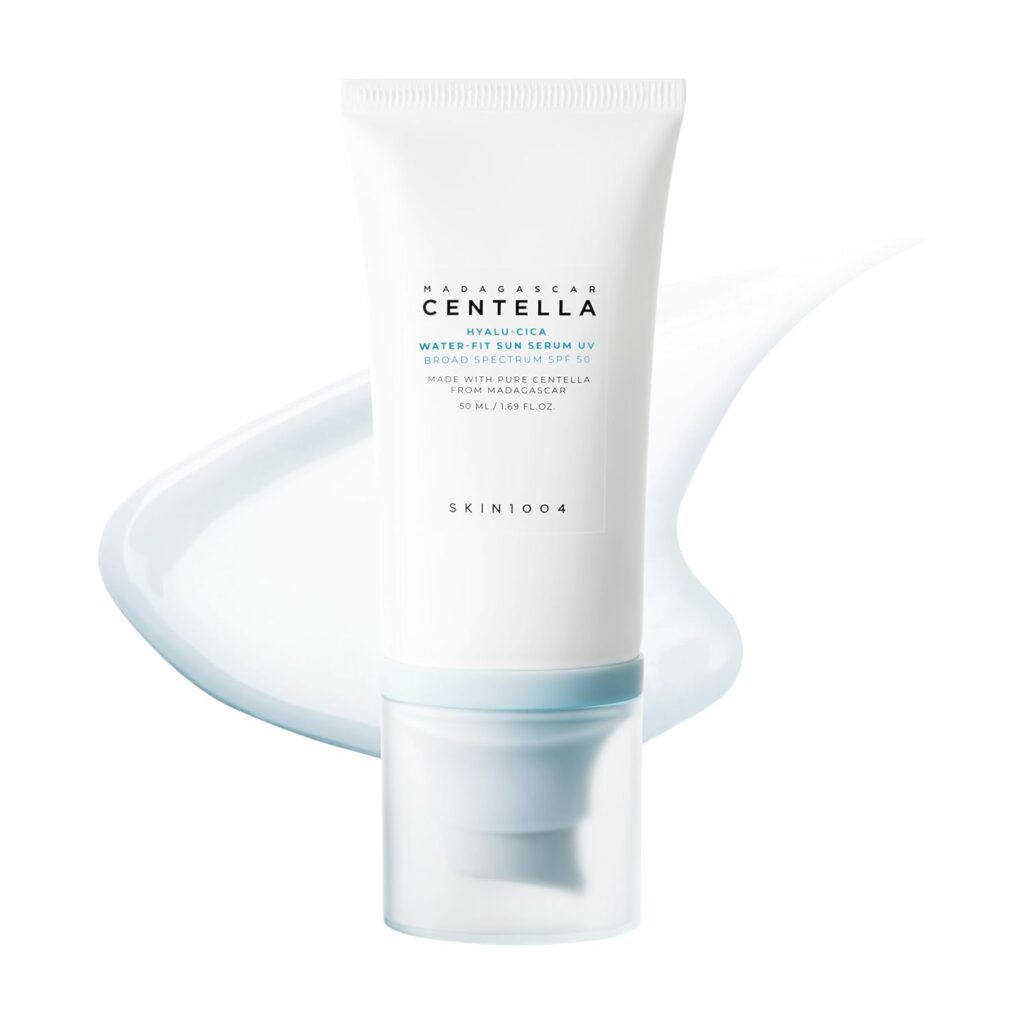
SKIN1004 Madagascar Centella Hyalu-Cica Water-Fit Sun Serum is the most recommended option for all skin types, including sensitive.
7. Panthenol Cream
Panthenol cream is a barrier-repairing moisturiser built around provitamin B5, known for attracting and retaining moisture while calming sensitivity.
It seals every layer applied before it, which is why it always comes second-to-last in any K-beauty routine.
Searches for panthenol moisturisers grew over 180% in 2025.
8. Korean Sunscreen
Korean sunscreen is not just the final step. It is the step that makes every other step count.
Every product you layer underneath builds your skin barrier. UV damage undoes that work daily without SPF in place.
Korean sunscreens use UV filters not yet approved in Western markets, producing formulas that absorb like a moisturiser rather than sitting on the skin.
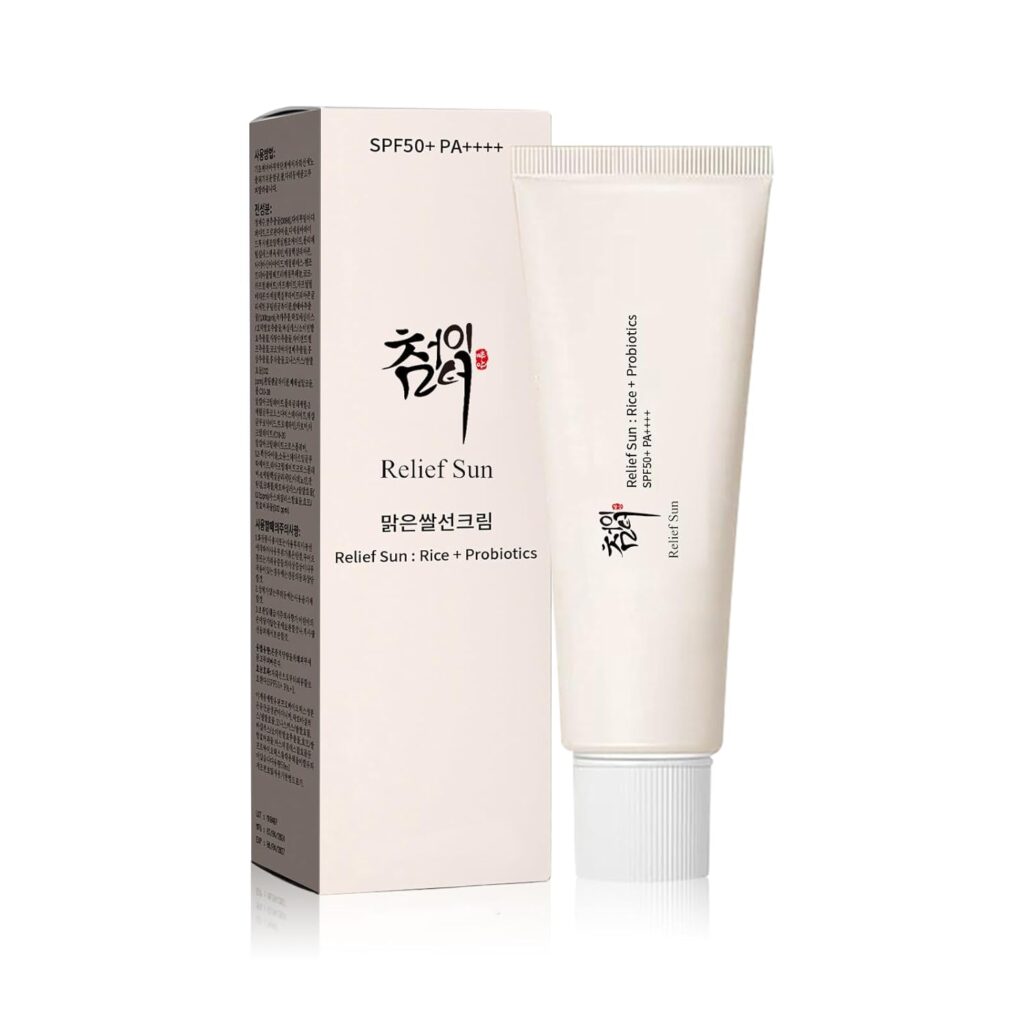
Beauty of Joseon Relief Sun: Rice and Probiotics SPF 50+ PA++++ is the most repurchased K-beauty SPF globally.
Supergoop Unseen Sunscreen covers a similar consumer need at $38 for 45ml. This does it for $15 to $22 for the same volume, and the texture comparison alone converts most users on the first application.
9. Hypochlorous Acid Spray
Hypochlorous acid spray belongs in a K-beauty article because it addresses the same core problem every product above is solving: protecting and calming the skin barrier without disrupting it.
Your white blood cells produce hypochlorous acid naturally to fight infection.
This spray applies the same compound to the skin surface, calming breakouts and redness without the dryness that traditional toning mists cause.
Search interest in this category surged over 350% on TikTok in 2025.
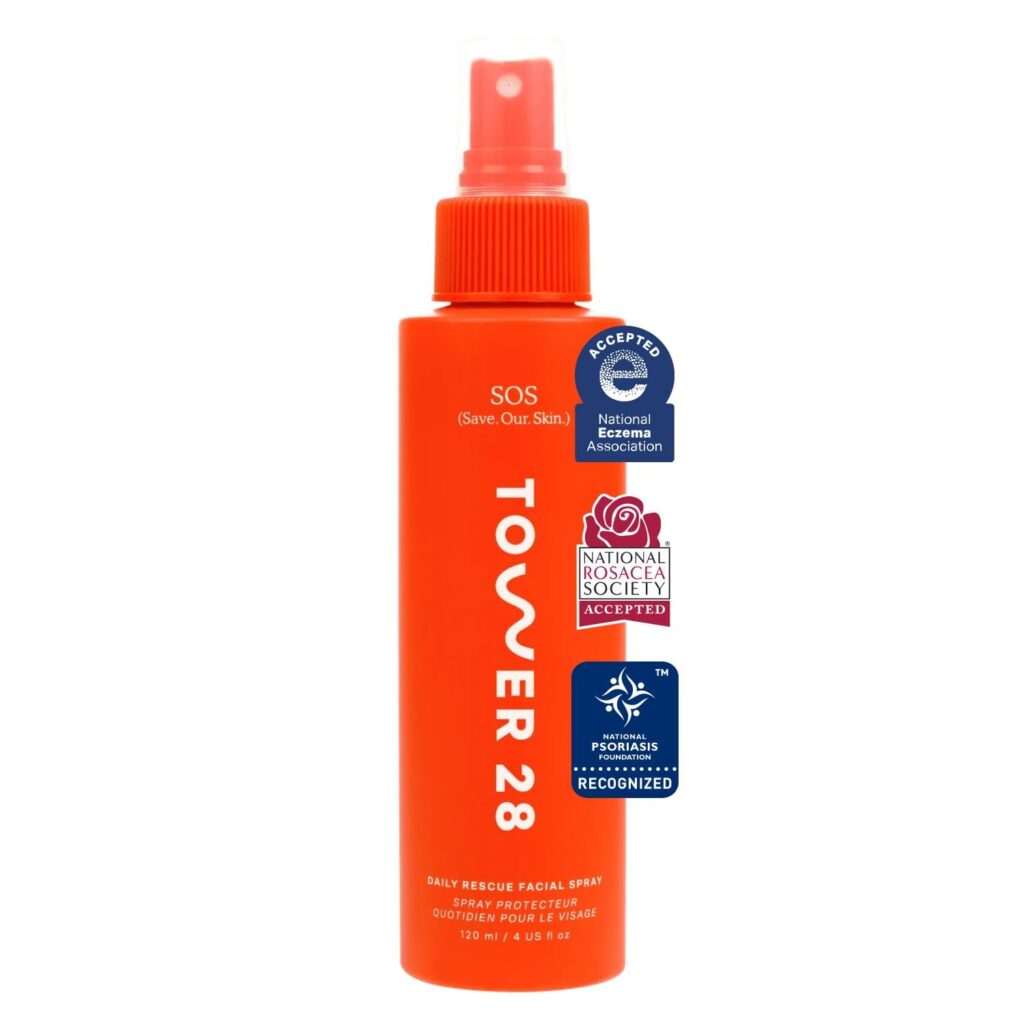
Tower 28 SOS Daily Rescue Facial Spray is the most widely reviewed option for daily use. Works on all skin types. 10k+ people have bought this every month.
10. Niacinamide Body Lotion
Niacinamide body lotion is the step that extends the K-beauty philosophy from your face to the rest of your skin, applying the same brightening and barrier-supporting logic to areas most Western routines have never addressed.
The category grew over 150% on TikTok in 2025, driven by users documenting visible improvements in body skin tone within four to six weeks.
11. Brightening Deodorant
Brightening deodorant uses the same active ingredient logic as K-beauty facial products: niacinamide, kojic acid, and AHA-based formulations applied to the underarm area.
Korean skincare extended its philosophy to this category years before Western brands noticed.
Search volume for brightening deodorant grew over 400% on Pinterest in 2025.
The K-Beauty Layering Cheat Sheet: How to Slot Snail Mucin Into Your Routine Without Starting Over
You do not need to rebuild your routine from scratch.
You need the right products in the right order around what you already use. Here is the sequence.
Step 1: Rice Water Face Wash: Start here, not at the serum. The barrier protection begins at the cleansing step.
Step 2: AHA Brightening Toner: Apply to clean skin with your palms, not a cotton pad. Dead surface cells dissolve, and every step after this absorbs at full efficiency.
Step 3: Birch Toner: Apply immediately after the AHA toner, while your skin is still slightly damp. Lightweight hydration that actually penetrates, not just sits.
Step 4: Ginseng Essence Water: Press in with warm palms. The antioxidant layer that prepares the barrier for what comes next.
Step 5: Snail Mucin Serum: Press gently rather than rub. This is the step the routine is built around. Rubbing disrupts the film the formula needs to form.
Step 6: Panthenol Cream: Seal everything in. Calm any sensitivity the actives created. This is the last skincare step before SPF.
Step 7: Korean Sunscreen: Every step above builds a barrier. This is the step that stops UV damage from undoing it by noon.
Before buying anything, try this tonight: apply your current moisturiser to damp skin instead of dry. That single change is half of what makes Korean layering work, and it costs nothing.
Save this routine. Your skin will thank you for it.
K-Beauty Hit $13 Billion. Here Is What the Next Four Years Look Like.
The Korean skincare market is projected to reach $13.9 billion by 2027, growing at 8.5% annually. That trajectory runs on one fuel: results visible enough to share.
We identified these 11 products, using data signals across six platforms including search, social, and retail velocity.
The next wave is already forming. Brightening deodorants and niacinamide body lotions are the earliest signals of a full-body K-beauty routine becoming standard.
Hypochlorous acid spray is entering mainstream routines as a mist and toner alternative.
Our data suggest it will become a top-five K-beauty category within 18 months.
Want the next wave of Korean skincare trends before everyone else? Join the Vault. Trend reports delivered weekly, free.
Conclusion
From snail mucin serum to brightening deodorant to glass skin routines, Korean skincare has built a $13.9 billion market by delivering results that spread without advertising.
These 11 products are the ones our data identified early, before the mainstream beauty coverage, before the waitlists, and before the sellouts.
You are reading this before most people have connected all 11 into a single coherent routine.
Frequently Asked Questions About Korean Skincare
1. How do I start a Korean skincare routine as a complete beginner?
Start with three products: a rice water face wash, a snail mucin serum, and a panthenol moisturiser.
Add Korean sunscreen as your fourth step immediately, because without SPF the actives in the other steps work against the clock. Give your skin four to six weeks before adding more.
2. Is a 10-step Korean skincare routine actually necessary?
No. Three to five targeted steps deliver most of the visible results.
The 10-step routine is a menu, not a prescription. Start with a cleanser, a serum, and a moisturiser, then add steps as your skin adjusts and you understand what it responds to.
3. Why does Korean sunscreen feel so different from Western SPF?
Korean sunscreens use UV filters approved in Asia and Europe that are not yet approved by the FDA.
These filters produce lighter, more cosmetically elegant formulas with no white cast.
That regulatory gap explains why Korean SPF absorbs like a moisturiser while most Western SPF feels like a separate layer sitting on top of your skin.
4. Are Korean skincare products safe for sensitive skin?
Most Korean skincare products are formulated without fragrance and harsh alcohols, which makes them well-suited for reactive skin.
Snail mucin and centella asiatica are the most popular K-beauty ingredients among people with sensitive skin.
Always patch test on your inner wrist for 24 hours before applying anything to your face.
5. What is the difference between a toner and an essence in Korean skincare?
A toner hydrates and prepares the skin to absorb what comes next. An essence delivers a light concentration of active ingredients as the first treatment step.
Both serve different functions and apply in order: toner first, then essence.
6. How long does it take to see results from a Korean skincare routine?
Week one, your skin absorbs the hydration and looks slightly more even. Week four, the texture change shows in photos.
Week eight is when people around you start asking what you changed.
Consistency across those eight weeks matters more than any individual product choice.